
Whipping Cream: The Professional Guide to Perfect Whipped Cream
At its heart, whipping cream is simply whipping cream—a dairy liquid high in milk fat, specifically designed to be whipped into a light, stable foam. It’s the backbone of countless desserts, foams, and cocktail toppers in professional kitchens.
If you manage a professional kitchen or cocktail bar and are curious about potential savings with a dependable supplier, try our quick 1-minute calculator to discover your savings.
What Is Whipping cream, Really?
For any chef or mixologist in the Canary Islands, especially in a fast-paced bar or restaurant, the question "crema para batir que es?" goes way beyond a dictionary definition. It’s about performance. It’s about knowing how this simple liquid will behave under pressure, literally and figuratively.
The magic all comes down to the fat globules. When you whip cream, you're essentially forcing air into the liquid while agitating these tiny spheres of fat. They collide, break apart, and then reform into a complex, stable network that traps the air bubbles. This is what creates that signature fluffy structure we all know and love.

The Three Key Players Inside
Think of it as a team effort between three core components:
- Milk Fat: This is the star player. The higher the fat content, the stronger and more stable your whipped cream will be. It provides the structure.
- Water: This is the liquid base that everything else is suspended in, allowing the fat and proteins to move freely.
- Proteins: These act like the support crew, helping to stabilise the network of fat globules once it has formed.
It's this delicate balance that makes choosing the right cream so critical for getting consistent results. To guarantee speed and a perfect texture every time, most professionals rely on specialised tools. If you want to dive deeper, you can learn more about how cream chargers are used in bars and restaurants to completely transform the process.
How Fat Content Creates Perfect Stability
The secret to a flawless, stable crema para batir isn’t about fancy technique—it’s pure science, and it all comes down to fat. If you want a rich, lasting foam that holds its shape, a high fat percentage is non-negotiable. I like to think of the little fat globules in the cream as bricks for building a wall; the more bricks you have, the stronger your final structure is going to be.
When you start whipping, these fat globules link up and form a protective net around the air bubbles you're forcing in. This network is what traps the air, creating that beautiful volume and creamy texture we're all after. For any professional bar or kitchen, especially in the warmer climates of Tenerife and Gran Canaria, this stability is everything. Your garnishes and cocktail foams have to survive service without turning into a puddle.
Choosing the Right Cream for the Job
Not all creams are made equal, and their fat content directly tells you what they're good for.
- Light Cream (Crema Ligera): With around 18-30% fat, this is perfect for adding a bit of richness to a sauce or your coffee. But try to whip it? You’ll be wasting your time. There just isn’t enough fat to build a structure.
- Whipping Cream (Crema para Batir): This is your entry-level option, containing 30-35% fat. It’ll get the job done for basic whipped toppings, but the foam will be on the softer side and won't hold up for long.
- Heavy Cream (Nata para Montar): At 36% fat or more, this is what the pros use. It delivers firm, durable peaks that are perfect for detailed piping on a pastry or creating a robust foam that can sit on a cocktail for minutes without collapsing.
From years of experience, I can tell you this: for reliable results that stand up to the demands of a busy service, always grab a cream with at least 35% milk fat. It’s the only way to guarantee the structural integrity you need for everything from a delicate mousse to a show-stopping cocktail topper.
Summary and Key Points
To really get the hang of crema para batir, you have to respect the fat content. It’s not just a number on the carton; it’s what dictates the stability, texture, and final volume of whatever you’re making. More fat creates a stronger, more resilient foam that won’t let you down mid-service.
- Fat Is Structure: Think of fat globules as the building blocks that trap air. The more fat you have, the stronger and more stable your foam will be.
- The 35% Rule: For a truly stable whipped cream that holds up, aim for 35% fat or higher. It’s the professional benchmark for a reason.
- Know Your Creams: Light cream is for sauces. Whipping cream and heavy cream are for foams, but heavy cream is what gives you unbeatable stability.
- Climate Matters: In a warmer environment like the Canary Islands, high-fat cream isn't a luxury; it's a necessity to stop your work from melting away.
- The Professional Standard: Using heavy cream (nata para montar) is how you get consistent, reliable results for demanding culinary and bartending jobs.
Frequently Asked Questions (FAQ)
Q: What is the ideal fat percentage for crema para batir?
A: For the best stability and longest-lasting results in a professional kitchen, 36% or higher is the gold standard. While a 30-35% cream will whip, it produces a much softer foam that won’t hold its shape nearly as long, especially when it gets warm.
Q: Why won't my low-fat cream whip properly?
A: Low-fat creams simply don't have enough fat globules. Those globules are essential for building the network that traps air bubbles when you whip. Without enough of them, you can't create a stable foam. It's like trying to build a wall with a handful of bricks.
Q: Does temperature affect how cream whips?
A: Absolutely. Temperature is critical. You need cold cream, a cold bowl, and a cold whisk. When the fat globules are cold, they’re firm and link together much more effectively, creating a stronger structure. If your cream is even slightly warm, it will likely fail to whip at all.
How N2O Boosts Your Yield and Speed
Anyone who has whisked cream by hand knows it's a slow, tiring process. For a busy kitchen or bar, it's just not practical. This is where food-grade nitrous oxide (N2O) completely changes the game. It works by dissolving into the cream's fat content much more efficiently than air ever could, creating a foam structure that's incredibly fine and stable.
The results are immediate and impressive. You can expect a volume increase of up to four times the original liquid amount. That's a massive yield improvement that directly impacts your bottom line, cutting down on waste and making every carton of cream go further. What was once a chore becomes an instant, on-demand action.
The diagram below shows how different creams behave under pressure, and it's a great visual reminder of why fat content is king.
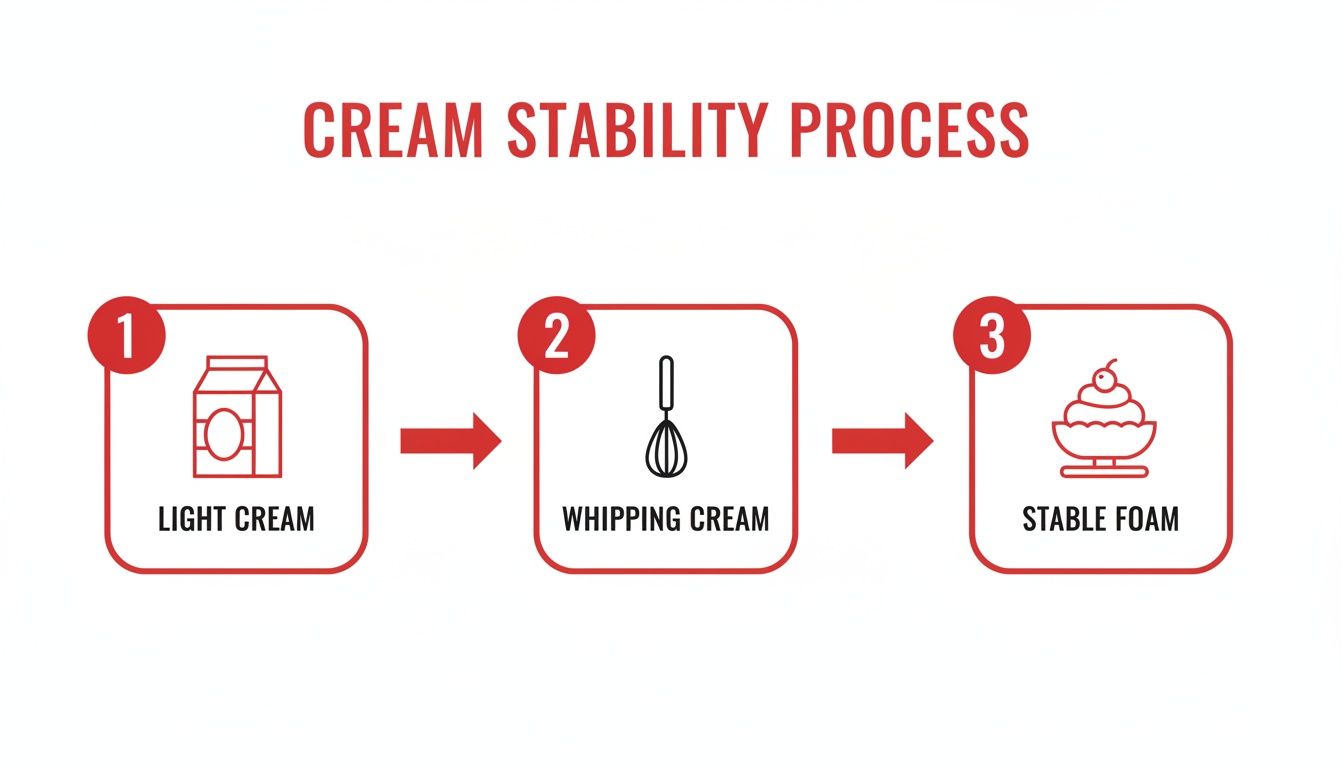
As you can see, only a true high-fat whipping cream can deliver the kind of stable, professional foam you need for desserts, cocktails, and garnishes.
Consistency is Everything in a Professional Setting
Using a cream whipper with an N2O charger isn't just about speed; it's about delivering perfect, repeatable results every single time. It’s the secret behind flawless mousses, rapid flavour infusions, and the kind of cocktail foams that get customers talking.
Here in the Canary Islands, where event catering and tourism drive massive volume, that operational speed is crucial. A certified cylinder can produce up to 1,000 charges, and using pure N2O can boost your yields by as much as 30% compared to whisking. If you're weighing your options, you can read our guide on 580g vs 2kg N2O cylinders to see which size fits your venue's needs.
It's no surprise that the Spanish whipping cream market is growing, largely driven by professional kitchens making the smart switch to automation. You can discover more insights about whipping cream market trends on databridgemarketresearch.com.
Choosing Your N2O Supply in the Canary Islands
Sourcing the right N2O for your crema para batir in the Canary Islands isn't just another line item on an order sheet—it's as critical as the cream itself. In a professional kitchen or bar, product purity and safety are non-negotiable. It’s why you absolutely have to look for suppliers whose products carry the essential ISO 9001, CE, and AESAN certifications. This isn't just bureaucracy; it's your guarantee of quality and traceability.
I've seen countless businesses get tripped up by the unique logistics of the islands—customs, transport, and ferry schedules can turn a simple order into a week-long headache. This is where a dedicated local supplier becomes your most valuable partner. Someone who can offer same-day delivery and handles all the complexities for you is the difference between a smooth service and a weekend-killing stockout.
Selecting the Right Cylinder Size
Choosing the right N2O cylinder comes down to one simple thing: your venue’s volume. There’s no one-size-fits-all answer.
- Small Canisters (666g-670g): These are perfect for smaller bars or cafés with a moderate, predictable demand. They're a breeze to handle and store when space is tight.
- Large Cylinders (2kg): For high-volume hotels, busy nightclubs, and catering operations, this is the only sensible choice. It's the most cost-effective solution, drastically cutting down on changeovers and maximising your team's efficiency during a chaotic rush.
Here’s a detail that often gets missed until the accountant calls: invoicing. Make sure your supplier provides IGIC-compliant invoices with every single order. It seems small, but it simplifies your accounting and keeps your business audit-ready, no questions asked.
To get a deeper understanding of the local rules, you can learn more about N2O compliance for professionals in the Canary Islands in our detailed guide.
Advanced Techniques in Mixology and Gastronomy
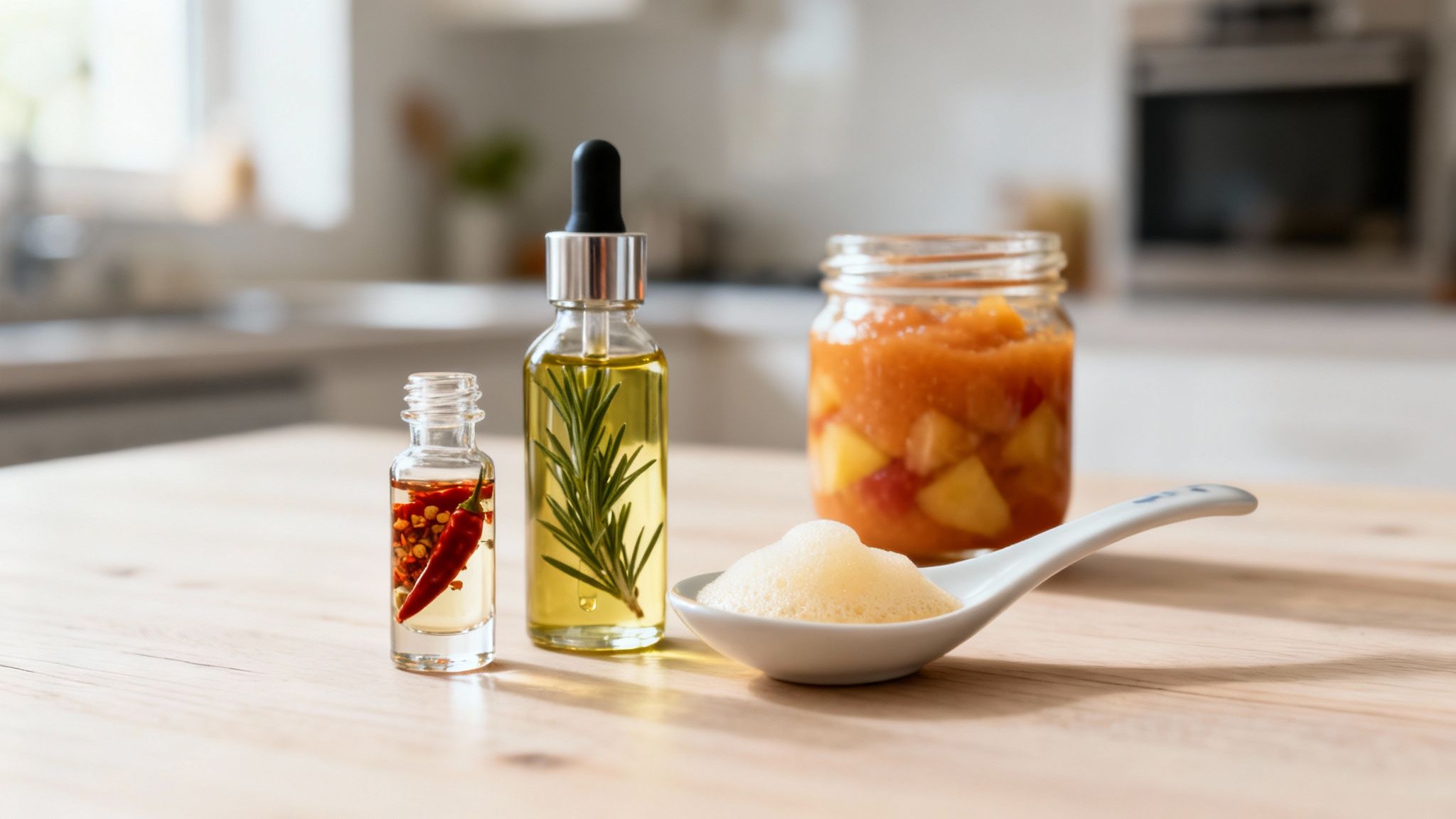
Let's move beyond a simple dollop of cream. The real magic of your crema para batir setup begins when you master advanced N2O techniques. The most powerful of these is rapid flavour infusion—a method that creates bespoke syrups, oils, and spirits in minutes, not weeks. It works by using the intense pressure from an N2O charger to literally force flavour compounds deep into a liquid, creating an instant transformation.
This isn't just a party trick; it's a game-changer for the dynamic hospitality scenes in Lanzarote and Fuerteventura, where speed and creativity are everything.
Practical Flavour Infusions
Here are a few ideas to get you started, straight from the playbook of top bars:
- Spirits: Ditch the pre-made stuff and create a signature chili-infused tequila for a truly memorable spicy margarita.
- Oils: Craft a pungent rosemary-infused oil in minutes to garnish a steak dish with a savoury foam.
- Syrups: Need a fresh mint syrup for mojitos right now? Forget steeping. An N2O infusion gets it done before the customer has even chosen a table.
But it doesn't stop there. You can create impossibly light espumas from almost any fruit purée or vegetable juice, adding unique textures to your menu that were once the sole domain of Michelin-starred kitchens.
Across Spain, where the whipping cream market is set for serious growth, venues using certified N2O chargers are already cutting their prep time by a staggering 40%. This isn't just about efficiency; it's about building a more stable, profitable operation that can handle high-demand events without breaking a sweat.
Common Questions About Whipping Cream & N2O
Getting that perfect, stable foam from your crema para batir and N2O setup isn't magic. It's about getting the small details right. I've heard the same questions from chefs and bar managers all over the islands, so let's get straight to the answers.
Can I Recharge a Cream Whipper Canister?
Absolutely not. Never, ever try to unscrew the head of a dispenser that's still under pressure. You have to dispense everything inside—all the cream and all the gas—before you even think about opening it up. Trying to recharge a pressurised canister is a serious safety risk and can easily damage your equipment.
How Should I Store My Whipped Cream?
Once you've charged a dispenser, it belongs in the fridge. Lay it on its side to make sure the cream and the N2O stay properly mixed. You’re aiming for a temperature between 2-4°C to keep it stable and food-safe. Stored correctly, the whipped cream inside can last for up to 10 days.
A mistake I see all the time is a charged dispenser left on the bar counter. The warmth just kills the fat structure. When you go to use it, you get a sad, soupy mess instead of a firm foam.
Why Is My Whipped Cream Too Runny?
If your foam is coming out weak and watery, it’s almost always one of three things:
- Not Enough Shaking: After charging it, you need to give the dispenser a good, hard shake—maybe 3-5 times. This is what actually dissolves the N2O into the fat in the cream.
- Wrong Fat Content: If your cream has less than 35% fat, you’re fighting a losing battle. You just won't get the structure needed for a stable whip.
- You Overfilled It: There's a max fill line on the canister for a reason. If you go past it, there isn't enough empty space for the N2O to properly pressurise and mix with the liquid.
Truly understanding "crema para batir que es" is about mastering these practical steps. Get them right, and you'll get perfect results every single time.
Ready to streamline your operations with a reliable, certified N2O supply? Kings Canisters offers same-day delivery across the Canary Islands, ensuring your bar or kitchen never runs out. Explore our professional-grade N2O cylinders at https://www.kingscanisters.com.